

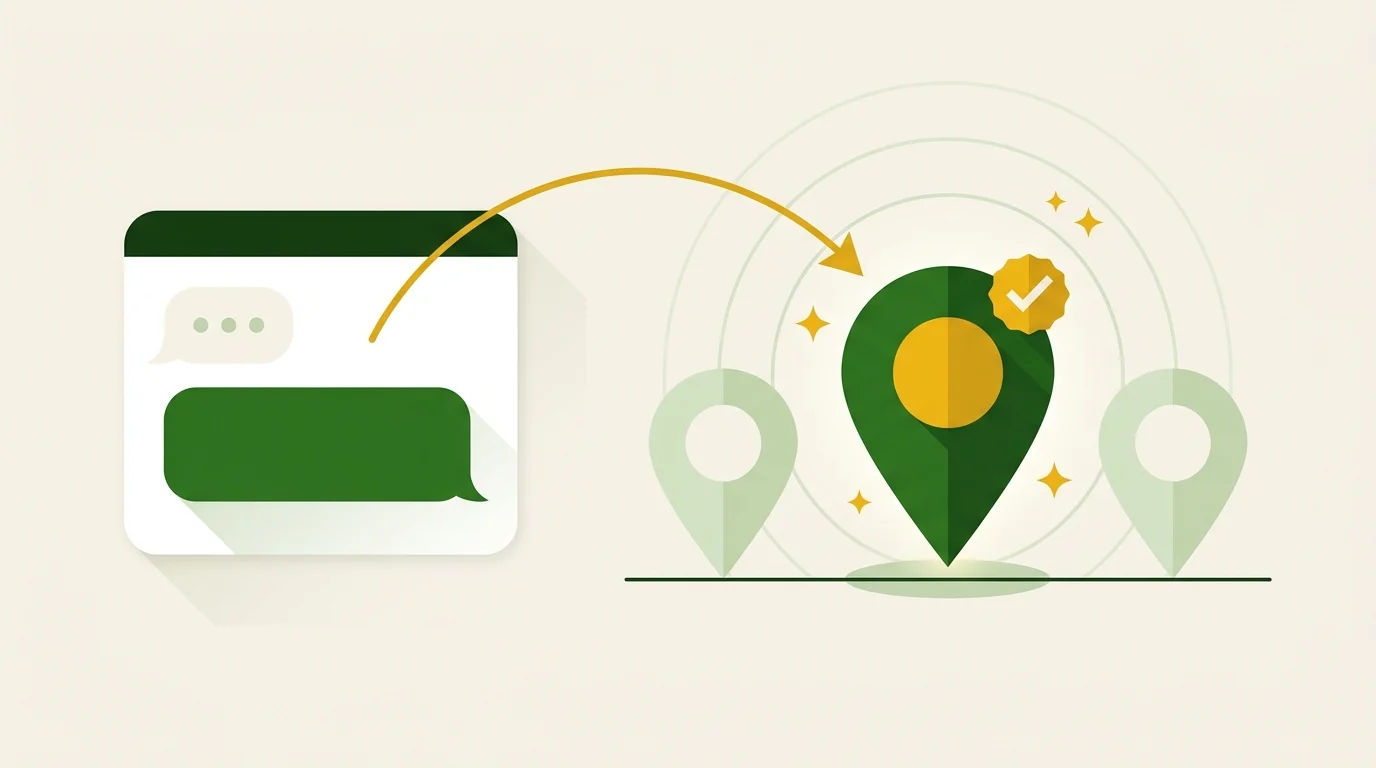
ChatGPT recommends businesses it can verify — so the fastest way to get recommended is to become easy to confirm from several independent sources at once. In practice that means a claimed and accurate Foursquare listing, consistent business details everywhere they appear, crawlers allowed through your robots.txt, content that answers questions directly, and genuine third-party mentions. Most businesses see movement within four to eight weeks of fixing those five things.
Here’s the part that surprises almost everyone: ChatGPT does not read your Google Business Profile to answer local questions. It has its own data pipeline, and Google isn’t the first stop on it. If you’ve spent three years polishing your Google listing and you’re still absent from AI recommendations, that’s why.
This guide explains how the recommendation actually gets made, which sources ChatGPT reads and in what order, the six things worth doing about it, what genuinely doesn’t work, and what it costs. It’s based on OpenAI’s own published documentation and third-party citation research, not on guesswork about a black box.
How ChatGPT Actually Decides Who to Recommend
ChatGPT answers business questions from two completely different places, and knowing which one you’re fighting for changes what you should do.
The trained model. Everything the model absorbed during training — a compressed, general sense of which brands exist, what they do, and how they’re regarded. It has no live connection to your website. If you launched last year, you’re probably not in there, and there is no button to press.
Live retrieval. When the question needs current or local information, ChatGPT calls out to external tools and data sources, then writes an answer from what comes back. This is where almost all business recommendations are actually decided, and — critically — it’s the part you can influence this month.
The distinction matters because most advice about “ranking in ChatGPT” quietly assumes you’re trying to get into the training data. You aren’t. You’re trying to be the business that live retrieval surfaces and that the model feels safe naming. That shift in thinking is the foundation of all AI search optimisation work.
That last part is the bit worth dwelling on. A language model asked “who’s the best electrician in Leeds” has to name someone. Naming a business it can’t verify is a reputational risk for OpenAI, so the system reliably favours businesses it can confirm from multiple independent sources. Two consequences follow:
- You are not competing for a position. You are competing to be legible. There is no page two. A typical answer names one to three businesses, and everyone else simply doesn’t exist in that conversation.
- Verifiability beats size. A small firm with a clean, consistent, well-referenced footprint routinely gets named ahead of a larger competitor whose details contradict each other across the web.
That’s genuinely good news for smaller businesses, and it’s the opposite of how classic SEO tends to reward incumbents.
The Foursquare Problem: Why Your Google Listing Isn’t Enough
When you ask ChatGPT a local question, it does not query Google Maps or your Google Business Profile. Its primary source of place data is Foursquare, following a places-data partnership announced by OpenAI and Foursquare in December 2024. Foursquare’s database covers roughly 100 million points of interest across more than 200 countries, and it is what ChatGPT reads first when the question is local.
Independent measurement puts Foursquare’s share of ChatGPT’s local business results at roughly 60–70%. That figure comes from analysis by SEO researchers Yaggoseo and Natzir Turrado, reported by Mediaelx in May 2025. Several later sources quote “over 70%” instead, so treat it as a well-supported estimate rather than an official number — OpenAI doesn’t publish source weightings.
Two things follow, and they’re uncomfortable.
First, the listing most businesses have never touched is the one that matters most. Almost every UK service business has claimed and optimised its Google Business Profile. Very few have ever logged into Foursquare. Foursquare shut down its consumer-facing city guide in 2025, which means a great many listings are stale, incomplete, or wrong — outdated hours, old addresses, missing categories, businesses that closed years ago still listed as open.
Second, that staleness is an opportunity with a closing window. Right now, claiming and correcting a Foursquare listing is a free job that takes under an hour and that most of your competitors haven’t done. That will not stay true.
Your Google Business Profile still matters — it feeds Bing’s index indirectly and it obviously still runs Google’s own map pack, which is why it stays central to any local SEO campaign. It is simply not the lever people assume it is for ChatGPT specifically.
The one-hour test Ask ChatGPT for the best [your service] in [your town]. Then search Foursquare for your business name. If ChatGPT named three competitors and your Foursquare listing is missing, unclaimed, or wrong, you have just found the single highest-leverage hour of work available to you this quarter.
What ChatGPT Reads, in Order
For local business questions, the retrieval order reported by AI rank-tracking tools runs roughly as follows.
| Priority | Source | What it supplies | Can you control it? |
|---|---|---|---|
| 1 | Foursquare Places | Name, category, address, coordinates, hours, photos, ratings | Yes — claim and edit directly |
| 2 | Bing Places / Bing web index | Supplementary listings and general web results | Yes — claim Bing Places |
| 3 | Yelp | Reviews, categories, business detail | Yes — claim and maintain |
| 4 | Directories and trade bodies | Category validation, credentials | Partly — join and keep current |
| 5 | Your own website | Services, pricing, service area, credentials | Fully |
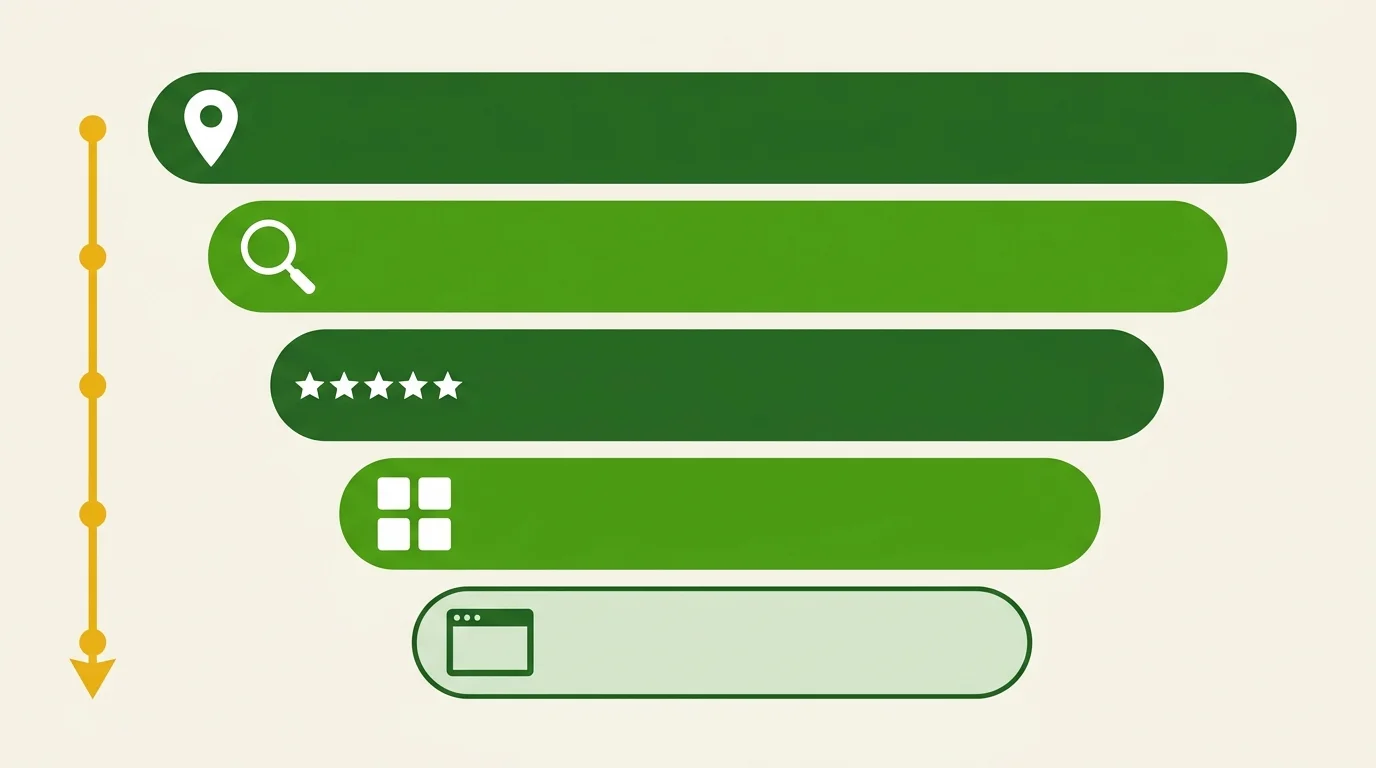
A few things worth knowing about that stack.
Bing is the fallback, and Bing’s reviews aren’t Google’s. When Foursquare comes up short, ChatGPT leans on Bing’s index. Research published by Whitespark in September 2025, covering 153 queries across 17 business categories in nine US cities, found Facebook outranked Yelp as the dominant Bing Places review source in eight of those nine cities — Los Angeles being the exception. If your Facebook page is a ghost town, that’s a gap, and it’s not one your Google reviews fill.
Worth noting that the study is US-based, so the UK picture may differ, and Whitespark themselves flag an unresolved industry debate about whether ChatGPT has begun leaning on Google rather than Bing for some local results. The practical advice survives either way: don’t let all your reviews sit on one platform.
Your website is the last stop, not the first. This is the hardest thing for business owners to accept. Your site is where ChatGPT goes to verify and enrich what it has already found elsewhere. It is rarely where the recommendation originates. Which means a beautiful website with no external footprint will lose to an ordinary website with a strong one.
Non-local questions work differently. Ask about a product category or a B2B service rather than “near me” and the place-data layer largely drops out. There the weight shifts to reference sites, mainstream and trade press, community platforms, YouTube, and the general web index. Different game, same underlying principle: be verifiable in more than one place.
Step 1 — Let the Right Crawlers In
If OpenAI’s crawlers can’t reach your site, nothing else in this guide will help — and a surprising number of sites block them without realising.
OpenAI documents separate crawlers with separate jobs, and each is controlled independently in robots.txt:
| Crawler | Job | Block it and… |
|---|---|---|
OAI-SearchBot | Surfaces sites in ChatGPT’s search features | You lose search visibility |
GPTBot | Collects content that may train foundation models | You’re excluded from training data only |
ChatGPT-User | Fetches a page when a user asks ChatGPT to read it | Users can’t pull your page into a chat |
OAI-AdsBot | Checks pages submitted as ChatGPT ad landing pages | Your ads may fail validation |
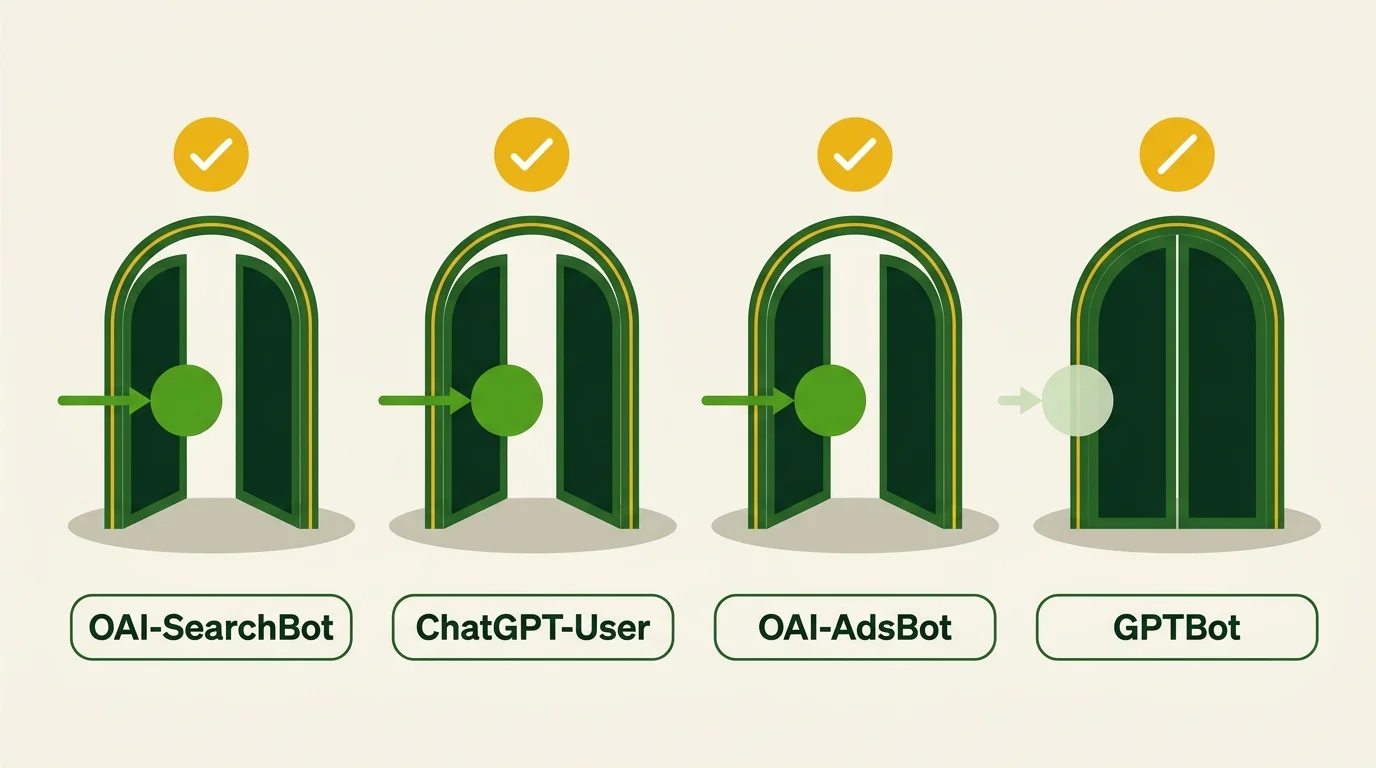
The common mistake is treating these as one bot. Blocking GPTBot — which plenty of sites did, reasonably, to keep their content out of training — does not remove you from ChatGPT’s search results, because search uses a different crawler. Equally, allowing GPTBot alone doesn’t buy you search visibility.
For most businesses that want AI visibility, allowing all of them is the straightforward answer. If you object to your content being used for training but still want to be findable, this is the configuration:
User-agent: OAI-SearchBot
Allow: /

User-agent: ChatGPT-User
Allow: /

User-agent: GPTBot
Disallow: /
OpenAI’s crawler documentation confirms these settings are independent of one another, and notes it can take around 24 hours from a robots.txt change for its systems to reflect the update. Don’t panic if nothing shifts overnight.
The trap almost nobody checks: your firewall. Robots.txt is only half the story. Cloudflare, Akamai, AWS WAF and similar bot-mitigation tools frequently rate-limit or challenge AI crawlers by default, returning 403 or 429 responses regardless of what your robots.txt permits. AI crawlers can’t solve CAPTCHAs. The result is a site that looks perfectly open in robots.txt and is invisible in practice.
Check your server logs for the OpenAI user agents. If you see requests being refused, or you see no requests at all, that’s your problem — and it’s a five-minute fix in your CDN settings that no amount of content work will substitute for. It’s the kind of thing a proper technical SEO audit catches on day one and that nobody finds by looking at their website.
Step 2 — Fix the Listings ChatGPT Actually Reads
Claim and correct your Foursquare listing first. It is free, it takes under an hour, and it is the single highest-impact action available to most local businesses right now.
Work through these in order:
1. Foursquare. Search for your business. If it doesn’t exist, add it. If it does, claim it and check every field: exact business name, correct category (be specific — “Emergency Plumber” beats “Home Services”), full address, coordinates that actually land on your building, current opening hours, phone number, website, photos.
2. Mapbox Contribute. Mapbox supplies the visual map that appears alongside ChatGPT’s local results and syncs data across a large number of downstream platforms. Its Contribute portal lets you submit or correct your own listing directly. Free, and fast.
3. Bing Places for Business. The fallback layer. Many UK businesses have never claimed this. Ten minutes.
4. Apple Business Connect. Growing in relevance as Apple’s assistant integrations expand, and another independent confirmation source.
5. Yelp. Lower priority in the UK than the US, but it’s an active input and worth twenty minutes.
6. Facebook. Not for the audience — for the reviews. Given Whitespark’s finding on Bing Places review sources, an active Facebook page with genuine reviews is doing quiet work you can’t see.
7. Google Business Profile. Still essential, still not the thing solving your ChatGPT problem.
The single most important quality bar across all of these is hours accuracy. Incorrect opening hours are one of the most common causes of a business being skipped in AI recommendations — the system is trying to avoid sending someone to a closed door, and a listing it can’t trust on hours is a listing it deprioritises entirely.
Step 3 — Make Your Business Unambiguous
AI systems build a picture of your business by combining fragments from dozens of sources, so every contradiction between those fragments reduces confidence — and low confidence means no recommendation.
Get your NAP identical everywhere. Name, address, phone. Not similar — identical. “Vertex SEO Ltd” and “Vertex SEO” are two entities to a machine. “Suite 4, 12 High St” and “12 High Street, Suite 4” create doubt. Pick one canonical form, write it down, and use it on every listing, every profile, every citation, and in your schema.
Implement structured data properly. JSON-LD tells machines what you are in a language they parse natively rather than infer. At minimum:
OrganizationorLocalBusiness— who you are, where, contact details, opening hoursService— each service, described individuallyFAQPage— for genuine question-and-answer contentReview/AggregateRating— only where reviews are genuinely displayed on the page
A note on FAQ schema specifically: Google retired FAQ rich results in May 2026, so the stars and expandable snippets are gone from Google’s SERPs. Google confirmed it still parses the markup to understand pages, and it remains useful for AI systems. Don’t strip it out because the visual reward disappeared — but equally, be sceptical of anyone quoting you a precise multiplier for what FAQ schema does to your AI citation rate. Those numbers circulate widely and I couldn’t trace one to a credible study.
Say the obvious things out loud. Your service area, your prices or price ranges, your credentials, your opening hours, what you don’t do. Businesses consistently omit this because “everyone knows” — but the machine doesn’t, and it won’t recommend what it can’t confirm.
Step 4 — Write Answers, Not Articles
Content gets cited when it answers a specific question completely, in one place, in language that can be lifted without editing.
This is a genuine change of format, not just a change of topic. The blog post that opens with three paragraphs of context before reaching the point is structurally unsuitable for extraction — there’s nothing to quote. What gets pulled into an AI answer is a self-contained passage that resolves the question on its own.
Practically:
- First sentence under every heading answers the heading completely. If someone read only that sentence, they’d have the answer. Everything after it is elaboration.
- One question per section. Don’t bundle three related questions under one heading and answer them in a flowing narrative.
- Include the specifics you’re tempted to hedge. Actual prices or ranges. Actual timescales. Actual numbers. Vague content is unquotable content, and “it depends” cites nobody.
- Answer the questions customers actually ask, not the ones with search volume. What does it cost? How long does it take? How do I choose between providers? What goes wrong? These have modest search volume and enormous citation value.
- Don’t gate it. Content behind a login, a paywall or an email form is content that can’t be cited.
- Keep it current. Multiple citation studies point to a strong freshness effect, with recently updated pages cited more often than stale equivalents. Set a review cycle for your key pages.
If you want a working example of the format, the article you’re reading is written to it deliberately — every heading is a question, and every first sentence answers it.
Step 5 — Earn Third-Party Validation
A business referenced on three websites is invisible; the same business referenced across fifty is trustworthy — and that difference is largely what decides who gets named.
Because the underlying test is verifiability, mentions you don’t control are worth more than anything on your own site. Priorities:
Reviews, across more than one platform. Google alone isn’t the answer here, given how much weight sits with Facebook and Yelp in the sources ChatGPT reaches for. Ask systematically. Reply to all of them. A steady trickle of genuine recent reviews across three platforms beats a hundred five-star reviews on one platform from 2022.
Trade and local press. A mention in a genuine industry publication or a regional business title is a strong independent confirmation. For UK businesses, regional press and chambers of commerce are underrated here — they’re credible, they’re crawlable, and they’re achievable without a PR budget.
Community platforms. Reddit, Quora and LinkedIn all feed AI answers, LinkedIn particularly for professional and B2B questions. The rule is participate genuinely — answer questions in your area of expertise, don’t drop promotional links. Astroturfing is both obvious and counterproductive.
Directories that actually matter. Trade bodies, professional registers, accreditation schemes, sector-specific directories. Not the 500-directory blast that low-cost SEO packages still sell — those are ignored at best.
YouTube. Video content correlates strongly with AI visibility in several citation studies, and it’s the channel most service businesses skip entirely.
Original data. The strongest citation signal available to a small business. Survey your customers and publish the findings with your methodology. Analyse something public in your sector. Publish real pricing. If you produce a number that doesn’t exist anywhere else, everyone who wants that number has to cite you — and AI systems are looking for exactly this kind of primary source.
Step 6 — Measure It, or You’re Guessing
Track whether ChatGPT names you for the prompts your customers actually use, because rankings and traffic won’t tell you.
There is no Search Console for ChatGPT. Answers vary between users, sessions and locations, and they change without notice. So measurement here is sampling, not reporting, and you should treat any tool promising precision with suspicion.
A workable minimum, free:
- Write down the ten to twenty prompts a real customer would type. Not keywords — prompts. “Who’s the best emergency plumber in Sheffield?” “I need a family solicitor near me, who should I call?”
- Run them monthly in a logged-out session. Record who gets named, and which sources are cited.
- Log two things separately: mentions (ChatGPT names you in the text) and citations (ChatGPT links to a page as a source). You can have either without the other, and they mean different things.
- Watch your server logs for
OAI-SearchBotandChatGPT-Userhits. Rising crawler activity is your earliest signal that something is working. - Segment AI referral traffic in GA4 so you can see it separately from organic.
Paid tools will automate the sampling across several AI platforms and are worth it once you’re spending meaningfully. They don’t replace the manual check — and none of them have privileged access to OpenAI’s systems, whatever the marketing implies.
Can I Just Pay to Be Recommended?
You can now buy ads inside ChatGPT in the UK, but you cannot buy the recommendation itself — and the distinction is the whole point.
ChatGPT’s advertising rollout moved quickly. OpenAI announced testing in January 2026 and launched a US pilot on 9 February 2026 for logged-in adult users on the Free and Go tiers. Canada, Australia and New Zealand followed on 26 March 2026. The UK went live on 6 June 2026, making it OpenAI’s first European market and the fifth geography overall.
What you can actually buy here is narrower than the headlines suggest. The US opened self-serve buying in May 2026. In the UK it launched as a managed pilot running through agency partners, with self-serve access still maturing — and reputable sources disagree about how open it currently is. Check directly before you budget, rather than trusting any single write-up, including this one.
What you’re buying. Ads appear as clearly labelled “Sponsored” units placed below the response, visually separated from it. OpenAI’s stated position is that ads do not influence how ChatGPT answers questions. Paid tiers — Plus, Pro, Business, Enterprise and Education — remain ad-free.
So the recommendation and the ad are two different things. If ChatGPT names three competitors and you appear underneath in a sponsored box, you have bought a placement next to someone else’s endorsement. That has value, but it isn’t the same product, and it doesn’t compound. Stop paying and it stops.
Where ads genuinely make sense is the same place PPC always did: immediate visibility while the organic work matures, and testing which prompts actually convert before you invest months in being cited for them. That trade-off between paid speed and organic durability is the same one behind how much SEO costs and why the numbers look the way they do. Third-party monitoring suggests sponsored placements now appear on a substantial share of shopping-related ChatGPT queries, so in retail and ecommerce this is already a live channel rather than an experiment.
One honest caveat. Attribution and reporting on this channel are still thin compared with Google Ads. Budget accordingly, and don’t let anyone sell you certainty about it.
What Doesn’t Work
Several tactics being actively sold in 2026 have no demonstrated effect, and a few are actively counterproductive.
Submitting your business to OpenAI. There is no application form, no listing programme, and no way to register your business for organic recommendations. Anyone offering to “get you listed with OpenAI” is selling something that doesn’t exist.
llms.txt. A proposed standard — a plain-text file telling AI systems what your site contains. The idea is sensible and it costs nothing. But no major AI platform has confirmed it uses the file as a ranking or retrieval input, and Google has publicly indicated it doesn’t. Add it if you like. Don’t pay much for it, and be sceptical of anyone presenting it as the answer.
Keyword stuffing for AI. Cramming “best plumber in Sheffield” into a page twenty times worked badly for Google and works worse here. Extraction depends on clarity, not repetition.
Buying mentions and fake reviews. Beyond being illegal in the UK under consumer protection rules, review manipulation creates exactly the inconsistency that causes AI systems to lose confidence in an entity. It’s the opposite of the goal.
Blocking GPTBot and expecting nothing to change. Reasonable if you have licensing concerns. Just understand you’re making a trade, and check you haven’t accidentally blocked OAI-SearchBot at the same time.
Chasing every AI platform separately. ChatGPT, Perplexity, Gemini, Copilot and Claude weight sources differently, but the foundations are shared — verifiable entity, consistent data, accessible site, direct answers, independent mentions. Do the foundations once and you improve across all of them. Buying a separate “optimisation package” per platform is buying the same work five times.
Statistics you’ll see quoted that I couldn’t verify. In researching this piece I found a widely-repeated set of numbers — precise percentages for how often Wikipedia is cited, exact multipliers for what FAQ schema does to citation rates, specific conversion-rate advantages for AI traffic — that either trace back to nothing, or contradict themselves within the same article. One guide I read cited two different Wikipedia figures four paragraphs apart. Whitespark make the same point more sharply in their own research, warning readers to be sceptical of any article that uses AI as its source of answers — and asking whether we really want a future of citing AI about AI. Treat confident precision in this field as a warning sign rather than a credential.
How Long Does It Take?
Most businesses that fix the fundamentals start appearing in AI answers within four to eight weeks, though the range runs from days to several months depending on where you’re starting.
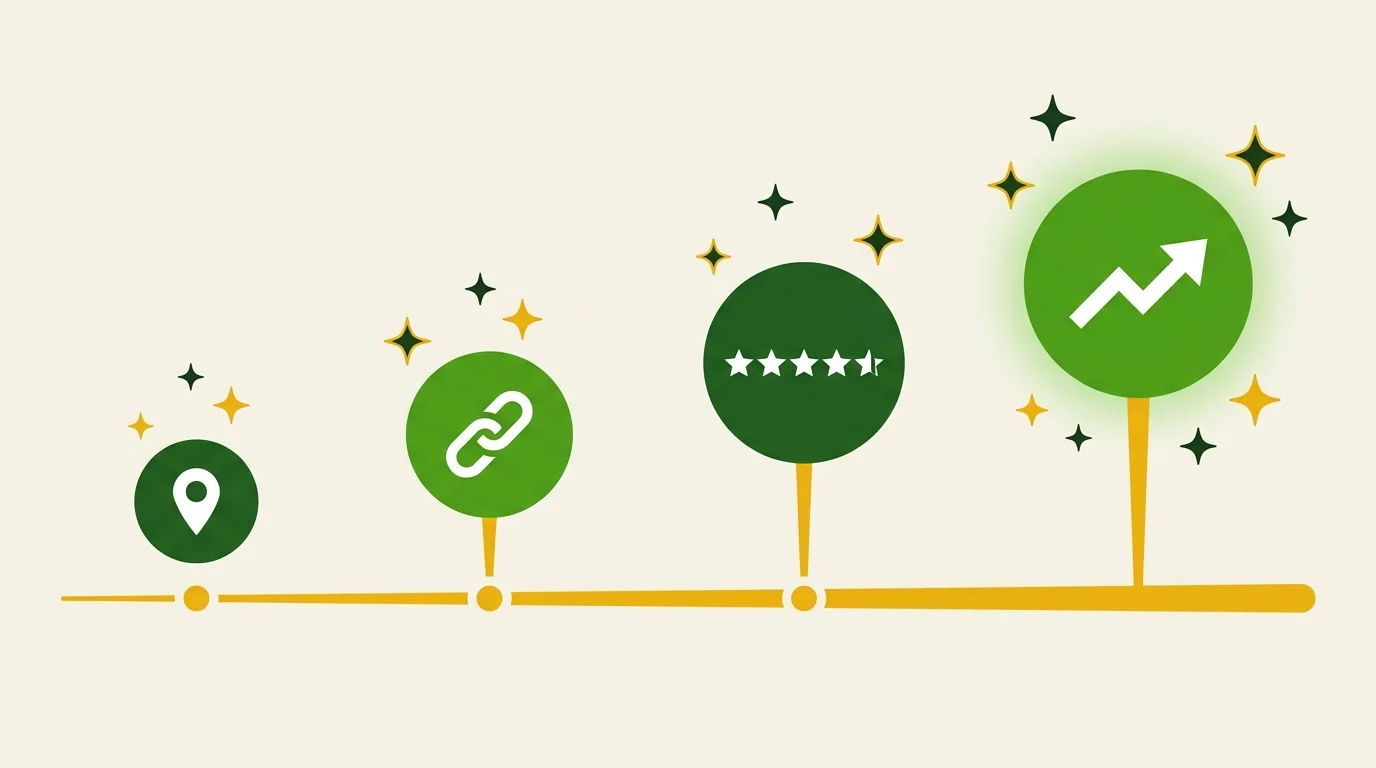
- Days–
2 wksThe listings layer
Foursquare, Mapbox, Bing Places and crawler access are the fast wins. If your problem was a missing Foursquare listing or a firewall blocking
OAI-SearchBot, you can see movement almost immediately. - 4–8
weeksThe consistency layer
NAP corrections and schema need to be crawled and recrawled before they change how confidently you’re described. This is where most businesses first see themselves named.
- 3–6
monthsThe authority layer
Third-party mentions, reviews across platforms, published original data. Slower, and the part that actually holds.
- Ongoing
Because it isn’t a project
AI platforms change their source weightings without notice, and competitors are doing this too. Realistically this is a maintained discipline, not something you finish.
What speeds it up: an existing site with real authority, an established review profile, a business that’s been trading for years under one consistent name. What slows it down: a brand-new domain, a recent rebrand or move, inconsistent details across dozens of old listings, or a very competitive category.
What Does This Cost?
Doing it yourself costs nothing but time — realistically a full day for the listings and crawler work, then a few hours a month. Paying an agency typically runs £200–£600 a month on top of standard SEO, or comes bundled into higher-tier retainers.
The free tier is genuinely substantial, and any agency worth hiring will tell you so. Claiming Foursquare, Mapbox, Bing Places and Apple Business Connect, fixing your NAP, checking your robots.txt and running monthly prompt checks are all things a capable business owner can do without help. If budget is tight, do these and stop.
Where paying makes sense is the work that needs specialist time: schema implementation across a large site, restructuring existing content for extraction, digital PR and genuine mention-building, original research, and ongoing tracking across platforms. If you want a figure for your own situation rather than a range, talk to us about pricing.
A warning on pricing. AEO and GEO are being sold in 2026 at a substantial premium as though they were a separate product. They aren’t. This is SEO adapting to how search now works, in the same way mobile optimisation stopped being an add-on around 2016 and became part of the job. If an agency is quoting you a large separate fee for “AI optimisation” while doing conventional SEO alongside it, ask what’s actually different about the hours. Equally, an agency doing none of this in 2026 is quietly under-delivering, and their clients won’t notice until the decline is well underway.
Frequently Asked Questions
How do I get my business recommended by ChatGPT?
Make your business easy to verify from multiple independent sources. Claim and correct your Foursquare listing, keep your name, address and phone identical everywhere, allow OAI-SearchBot through your robots.txt and firewall, add structured data, publish content that answers questions directly, and build genuine reviews and mentions across several platforms. Most businesses see movement within four to eight weeks.
Does ChatGPT use my Google Business Profile?
Not directly. ChatGPT’s primary source for local business data is Foursquare, following a places-data partnership announced in December 2024, with Bing and Yelp as secondary sources. Your Google Business Profile reaches ChatGPT only indirectly, mainly through Bing’s web index. It remains essential for Google’s own map pack, but it is not the lever most people assume it is for AI recommendations.
Can I pay OpenAI to recommend my business?
No. There is no listing programme, application form or paid inclusion for organic recommendations. You can buy advertising inside ChatGPT — it launched in the UK on 6 June 2026, and sponsored units appear below responses, clearly labelled. OpenAI states they don’t influence the answer itself. Anyone offering to register your business with OpenAI for recommendations is selling something that doesn’t exist.
Why does ChatGPT recommend my competitors and not me?
Almost always because they are easier to verify than you are. Common causes: no Foursquare listing, business details that contradict each other across listings, a firewall blocking OpenAI’s crawlers, no reviews outside Google, or a website that describes services vaguely. Size is rarely the reason — a small business with a clean footprint routinely outranks a larger one with a messy one.
How long does it take to appear in ChatGPT results?
Four to eight weeks for most businesses after fixing the fundamentals. Listing corrections and crawler access can show results within days. Consistency and schema changes take a few weeks to be crawled and reflected. Authority signals like third-party mentions and reviews take three to six months. A brand-new domain takes longer than an established one.
What is AEO, and is it different from SEO?
Answer engine optimisation is the practice of getting your content cited by AI systems that answer questions directly rather than returning a list of links. It overlaps heavily with good SEO — the same technical health, structured data and content quality — but weights entity verification, formatting for extraction, and off-site mentions more heavily. It’s best understood as SEO adapting, not as a separate discipline.
Should I block GPTBot?
Only if you have a specific reason to keep your content out of AI training, such as licensing obligations. Blocking GPTBot does not remove you from ChatGPT’s search results, because search uses OAI-SearchBot — a separate crawler with independent settings. If you block GPTBot, check you haven’t blocked the search crawler alongside it, which is the common mistake.
Does llms.txt help me get recommended?
There is no confirmed evidence that it does. llms.txt is a proposed standard for a plain-text file describing your site to AI systems. No major platform has confirmed using it as a retrieval or ranking input, and Google has indicated it doesn’t. It costs nothing to add, so there’s no harm in it — but be wary of anyone charging meaningfully for it or presenting it as the solution.
How do I know if ChatGPT is recommending me?
Test it manually and check your logs. Write down ten to twenty prompts a real customer would use, run them monthly in a logged-out session, and record whether you’re named and which sources are cited. Separately, check your server logs for OAI-SearchBot and ChatGPT-User requests, and segment AI referral traffic in GA4. Paid tracking tools automate the sampling but have no privileged access to OpenAI’s systems.
Do I need to optimise separately for Perplexity, Gemini and Claude?
No. Each platform weights sources differently, but the foundations are shared: a verifiable business entity, consistent details, an accessible site, content that answers questions directly, and independent third-party mentions. Doing that work once improves visibility across all of them. Paying for a separate package per platform is usually paying for the same work several times.
Is it worth it for a small local business?
Yes, and arguably more than for large ones. Because AI systems favour businesses they can verify rather than businesses that are simply big, a well-organised small firm can be named ahead of a national competitor. The foundational work is also mostly free — claiming listings and fixing inconsistent details costs time rather than money.
What’s the single most important thing to do first?
Claim and correct your Foursquare listing. It’s free, it takes under an hour, it’s the primary source ChatGPT reads for local business questions, and most of your competitors haven’t done it. Once that’s done, check your robots.txt and firewall aren’t blocking OAI-SearchBot.
The Bottom Line
Getting recommended by ChatGPT comes down to being the business it can most easily verify. Claim your Foursquare listing, make your details identical everywhere, let the right crawlers through, answer questions directly on your own site, and earn genuine mentions elsewhere. Most businesses see movement in four to eight weeks.
The reason this is worth doing now rather than next year is that the basics are still undone almost everywhere. Foursquare listings are stale, firewalls are quietly blocking AI crawlers, and most businesses are still optimising exclusively for a Google listing that ChatGPT doesn’t read. That gap is a genuine advantage — and it is the kind of advantage that closes.
If you’d like to know where you currently stand, tell us your business and your town and we’ll run the prompts your customers would actually use. We’ll tell you who ChatGPT names, which sources it pulls from, and what’s missing — including the parts you can fix yourself for free. That’s how we work as a Sheffield SEO agency: diagnosis before scope, and a straight answer either way.
Find out if ChatGPT is naming you
Tell us your business and your town. We’ll run the prompts your customers would actually use, and send you what ChatGPT says — who it names, which sources it pulls from, and what’s missing.
Get your AI visibility check